Investing in Tirupati Real Estate vs Hyderabad , Banglore , Chennai
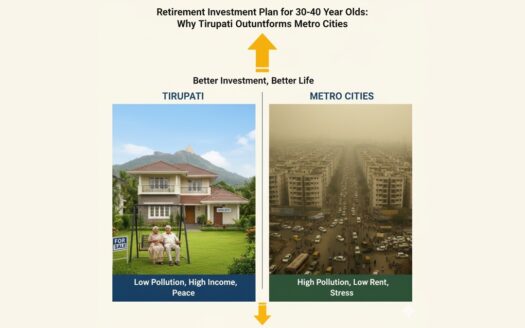
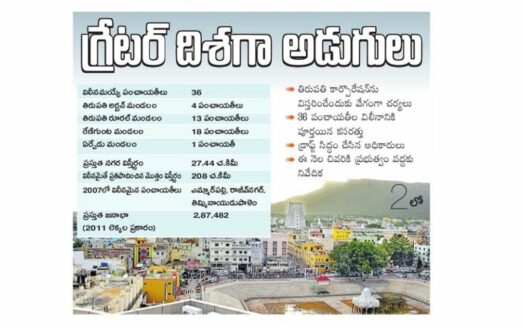
Tirupati — the spiritual abode of Lord Venkateswara — is undergoing a rapid transformation. Traditionally known as a pilgrimage destination, the city is now emerging as a strong Tier-2 economic growth engine in Andhra Pradesh, making it an attractive choice for real estate investors seeking stable returns and long-term appreciation.
With strategic infrastructure development, the presence of premier educational institutions, and recession-proof demand driven by tourism, Tirupati presents a unique and compelling investment opportunity.
1. Why Invest in Tirupati Real Estate? (The Core Appeal)
Tirupati’s investment strength lies in its rare combination of spiritual stability and economic expansion.
🔹 Recession-Proof Demand from Tourism
With an estimated 30 million pilgrims visiting annually, Tirupati enjoys year-round demand.
This constant inflow fuels:
Short-term rentals
Hotels
Service apartments
👉 Result: Consistent rental yields, largely insulated from broader economic slowdowns.
🔹 Industrial & IT Corridor Potential
Tirupati lies along the Chennai–Bengaluru Industrial Corridor (CBIC)
APIIIC SEZ near Renigunta Airport
Presence of IIT Tirupati and IISER
These factors are laying the foundation for an IT, electronics, and industrial ecosystem, driving strong future demand for both residential and commercial real estate.
🔹 Infrastructure Upswing
Renigunta International Airport
Smart City initiatives
Road and urban infrastructure upgrades
👉 These developments accelerate urbanisation and boost property valuations.
🔹 Affordable Entry Point
Compared to saturated Tier-1 cities like Hyderabad and Bengaluru, Tirupati offers:
Lower entry prices
Higher percentage appreciation potential
This makes it ideal for early-stage investors.
2. Best Locations to Invest in Tirupati High Appreciation Growth Corridors
Focus on areas benefiting from infrastructure and industrial spillover:
Renigunta
Close to airport & SEZ
Ideal for IT and industrial workforce housing
Yerpedu
Rising industrial and logistics activity
Strong long-term potential for plotted developments
Chandragiri & Tiruchanur
Emerging residential zones
Driven by city expansion and connectivity upgrades
💰 High Rental Yield Zones
Ideal for steady monthly income:
KT Road & Srinivasa Puram
Central locations
Strong demand from students, hospital staff, and service professionals
Established civic infrastructure
3. Property Appreciation: Last 5 Years vs Next 5 Years
Metric Last 5 Years (2018–2023) Next 5 Years (2024–2029 – Projection)
Growth Rate (CAGR) Stable, Slow (~7–10%) Accelerated (~12–18%)
Primary Drivers Pilgrimage, Education, Healthcare Industrialisation, IT/Electronics, Infrastructure
Market Nature Stable, Organic Growth Externally Driven Economic Expansion
🔍 Analysis
The next five years are expected to witness a significant surge.
Earlier growth was organic, but future appreciation will be driven by:
CBIC development
SEZ expansion
Industrial and employment growth
👉 This combination can lead to sharp increases in land and property values.
4. Tirupati vs Other Major Cities
City Investment Focus Risk Profile Tirupati Advantage
Hyderabad / Bengaluru / Chennai IT & Services Mature, Expensive Tirupati offers lower entry cost & higher % returns
Amaravati Political Capital High Risk / High Reward Tirupati offers stable, predictable growth
🧠 Conclusion
Tirupati stands at a perfect investment midpoint:
Stability from spirituality & tourism
Growth from industry & infrastructure
It is less volatile than Amaravati and less saturated than metro cities.
📝 Investment Action Plan
⏳ Investment Horizon
5 to 10 years for optimal capital appreciation
💵 Investment Amount
DTCP/RERA-approved plots: ₹25–50 Lakhs (city outskirts)
Apartments (prime areas): Starting around ₹50 Lakhs
🔍 Due Diligence Checklist
Clear land titles
DTCP / RERA approvals
Proximity to approved infrastructure & industrial projects
🚀 Final Thought
Tirupati is evolving from a spiritual town into a regional economic powerhouse.
Investing now allows you to enter before the industrial boom fully reflects in property prices.